Four months to the battery passport: what to prepare before 18 February 2027
23 October 2026
The battery passport is the first mandatory Digital Product Passport in the EU, from 18 February 2027. What goes into it, why it is a living record, and what to do now.
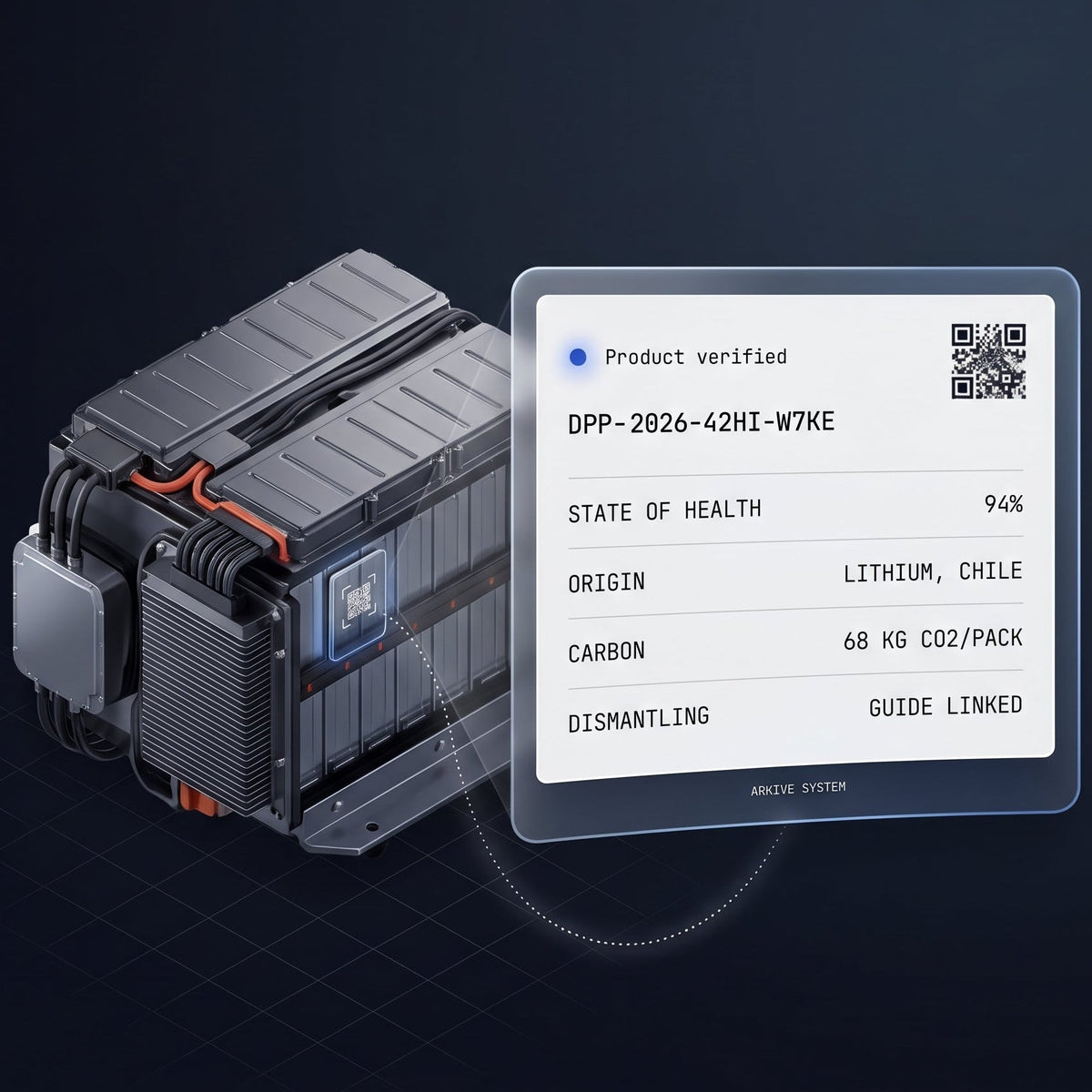
From 18 February 2027, the first mandatory Digital Product Passports in the EU apply. They are not under ESPR but under the EU Battery Regulation, and they cover three categories: electric vehicle batteries, light means of transport batteries (such as those in e-bikes and e-scooters) and industrial batteries with a capacity above 2 kWh. That is a little over four months away.
What goes into a battery passport
The battery passport brings together information that today is scattered across manufacturers, cell suppliers and recyclers. In broad terms it covers:
- who made the battery, where and when, and its unique identifier
- its chemistry and the materials it contains
- its carbon footprint
- recycled content
- performance and durability information
- how to dismantle, repurpose and recycle it
Part of this information is public. Other parts are only available to people with a legitimate interest, such as repairers, recyclers or authorities.
A living record, not a static document
This is the part many teams underestimate. A battery's state of health changes during its life. It is used, repaired, sometimes repurposed for a second life in energy storage, and eventually recycled. The passport has to reflect that, which means parts of it need updating over time, by different parties.
A PDF datasheet cannot do that. A passport needs a data model, clear ownership per field, and a way to update records without starting from scratch.
The lesson for every other industry
Batteries are first, but the pattern repeats across ESPR. Steel is expected to follow, then textiles, tyres, aluminium, furniture and more. The data fields differ per product group, but the underlying challenge is the same: collect correct data from many sources once, keep it current, and make it available to the right people.
Companies outside the battery sector can learn a lot by watching how battery makers and their suppliers handle this over the coming months.
What to do if you are in the battery value chain
- Confirm which of your batteries fall into the three categories.
- Check that every battery has a unique identifier you can link a passport to.
- Collect carbon footprint and recycled content data from cell and material suppliers now.
- Decide who in your organisation owns the passport data, and how updates during the battery's life will be handled.
How Arkive helps
Arkive builds passports from one record per product, collects supplier data against clear specifications, flags gaps, and keeps the record current as products change. The passport and the carbon footprint come from the same data, so they never contradict each other.
Book a 30-minute call if you supply into the battery value chain and want to check where your data stands.