Produce on demand: how Digital Product Passports end overproduction
5 November 2026
For years, supply chain planning was mostly guessing. Brands made too much just in case, and a big part of it was never sold. Digital Product Passports change that. When every sale is recorded, the factory can make only what is needed.
How planning worked before
Every supply chain manager knows the words. Forecasting, inventory planning, production planning and S&OP (sales and operations planning). Each team had its own system, its own spreadsheet and its own numbers. The forecast was based on last year's sales, the stock count was a week old, and the S&OP meeting happened once a month.
None of these systems talked to each other. By the time the numbers came together, they were already old. So the safe choice was always the same: make a bit more, just in case.
The cost of guessing
Here is a simple example. A brand forecasts 10,000 t-shirts. The factory makes 10,000. Only 6,000 are sold. The other 4,000 end up in discount bins, in storage, or thrown away.
Those 4,000 t-shirts still used cotton, water, energy and transport. Their full CO2 footprint was made for nothing. On top of that, the brand paid for the materials, the production, the storage and the markdowns. In the EU, large companies are now also no longer allowed to destroy unsold clothes and shoes under the ESPR, so overproduction becomes a legal problem as well.
The planner's dream
Every planner had the same dream:
- Just in time. Stock arrives right when you need it.
- Zero waste. Nothing is made that nobody buys.
- The perfect order size. Not too much, not too little.
The ideas were good. What was missing was real data from the whole chain, in real time.
What changes with a Digital Product Passport
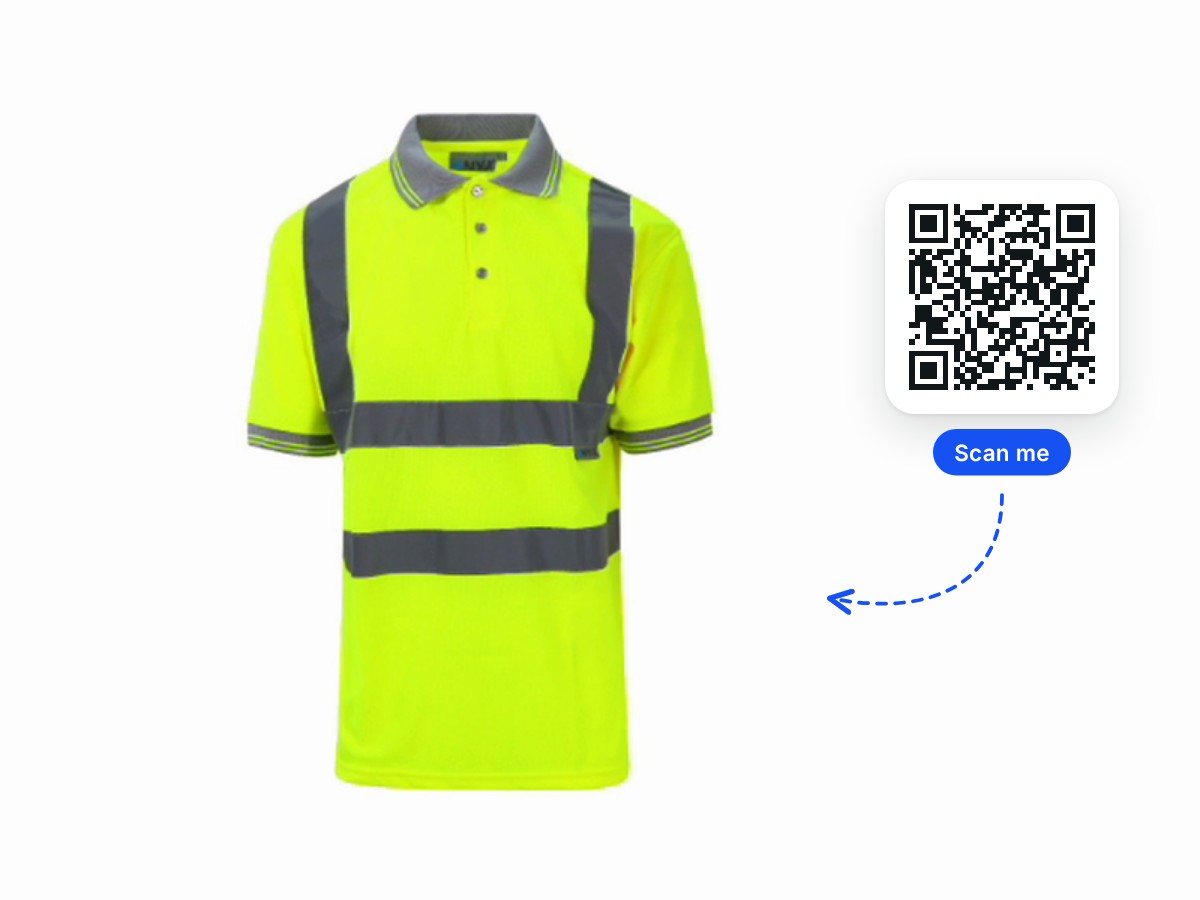
A Digital Product Passport gives every product its own ID and QR code. Everything that happens to that product is linked to it. Where it was made, when it was shipped, where it was sold, when it was scanned and when it was returned.
So instead of five systems with five versions of the truth, there is one record per product that everybody can read.
Blockchain in plain words
A blockchain is a shared record that every partner can read and nobody can change afterwards. Think of a notebook where you can add new pages, but never tear one out. Each sale is a new page, locked with a time and a place.
Because nobody can change the record, the brand, the factory and the retailer can all trust the same numbers. No more arguing about whose spreadsheet is right.
From sales signal to production on demand
When the data is shared and live, the factory does not need a forecast from last year. It gets a signal: 6,000 sold, make 6,000. Smaller batches, made closer to the moment of sale. That is producing on demand, and it is what just in time was always meant to be.
Better for the planet, the people and the cost
- Less waste. You only make what people buy.
- Lower CO2. Every product you do not make saves its whole footprint.
- Lower cost. Less stock, less storage and fewer markdowns.
- Easier compliance. The same data supports your ESPR and DPP reporting.
Frequently asked questions
What does produce on demand mean?
It means a factory makes products based on real sales instead of a forecast. Production follows demand, so there is little or no leftover stock.
Do I need blockchain for a Digital Product Passport?
Not always, but a shared record that cannot be changed makes the data trusted by every partner in the chain. That trust is what makes automatic signals to the factory possible.
How much data do I need to start?
Less than you think. Most of it is already in your shop, ERP or supplier files. Read more about making DPP data collection lighter.
Start with one free DPP
You do not need to change your whole supply chain at once. Start with one product. Make your first Digital Product Passport for free, connect your shop or ERP, and see your own sales data in one shared record. Want to know more first? Read our guide to the free Digital Product Passport.