Asset lifecycle management, made easy: can CO2 and cost both go down?
30 October 2026
How much CO2 and cost does your installation carry over its whole life, and can both go down without your customer noticing? How product passports make asset lifecycle management practical.
Take one building. Or one installation inside it: the heating, the ventilation, the sprinklers, the lifts. Two simple questions are surprisingly hard to answer for most owners and installers today. How much CO2 does it carry over its whole life? And what does it really cost, from installation to replacement?
The question that matters most comes after that: can both go down, without the customer noticing anything except the result?
Why the numbers are hard to get
An installation is made of many products from many manufacturers. The data needed to answer those questions is spread across product datasheets, environmental product declarations, maintenance logs, invoices and spare-part lists. Some of it sits with the manufacturer, some with the installer, some with the facility manager. Nobody has the full picture, so decisions are made on habit and on purchase price alone.
What changes with product passports
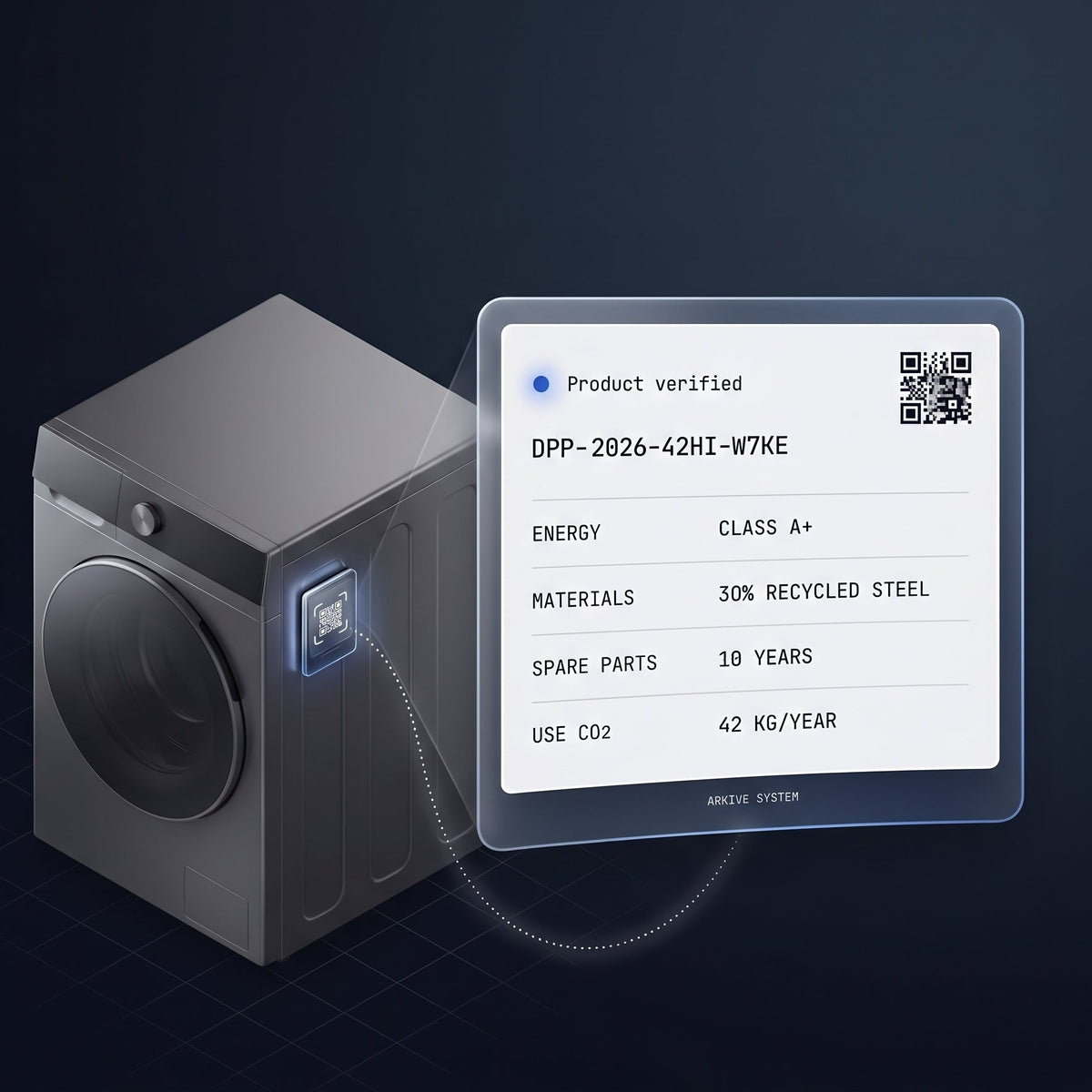
Digital Product Passports give each product a structured record: what it is made of, its carbon footprint, how to maintain and repair it, and what happens at end of life. The revised Construction Products Regulation brings passports to construction products, and ESPR adds more product groups over time.
Put the passports of every product in an installation together, and the installation gets a record of its own. That is the basis for asset lifecycle management that actually works.
Where CO2 and cost can both go down
- Component choice. Two equivalent components can differ a lot in embodied carbon and in lifetime cost. With data per product, the difference becomes visible before you buy.
- Repair instead of replace. When repair and spare-part information is in the record, a repair becomes the easy option rather than the exception.
- Maintenance based on data. Intervals based on actual product information, rather than habit, avoid both unnecessary work and early failures.
- End of life. Knowing what is inside a product makes reuse and recycling realistic, which lowers both waste costs and the footprint of the next installation.
None of these change what the customer experiences. The building stays warm, ventilated and safe. What changes is how much it costs and emits to keep it that way.
What to do first
- Pick one installation type you deliver or manage often.
- List its main products and check which manufacturers already provide environmental and maintenance data.
- Decide what you want to see first: CO2, lifetime cost, or both.
How Arkive helps
Arkive builds passports per product and calculates the LCA from the same data, aligned with ISO 14040, 14044 and 14067. Because the record stays current as products are maintained, repaired or replaced, the picture of the whole installation stays current too. Asset lifecycle management, made easy.
Book a 30-minute call and we'll look at one of your installations together.