The EU Digital Product Passport registry is live: what it does and what it doesn't
9 October 2026
On 20 July 2026 the European Commission switched on the Digital Product Passport registry. Here is what it actually stores, what stays with you, and what to do now.
On 20 July 2026 the European Commission launched the Digital Product Passport registry, together with a test environment for businesses. It got little attention outside compliance circles, but it is the first piece of shared EU infrastructure for product passports that actually runs. If you make or sell physical products in the EU, it is worth understanding what it is, and just as important, what it is not.
What the registry does
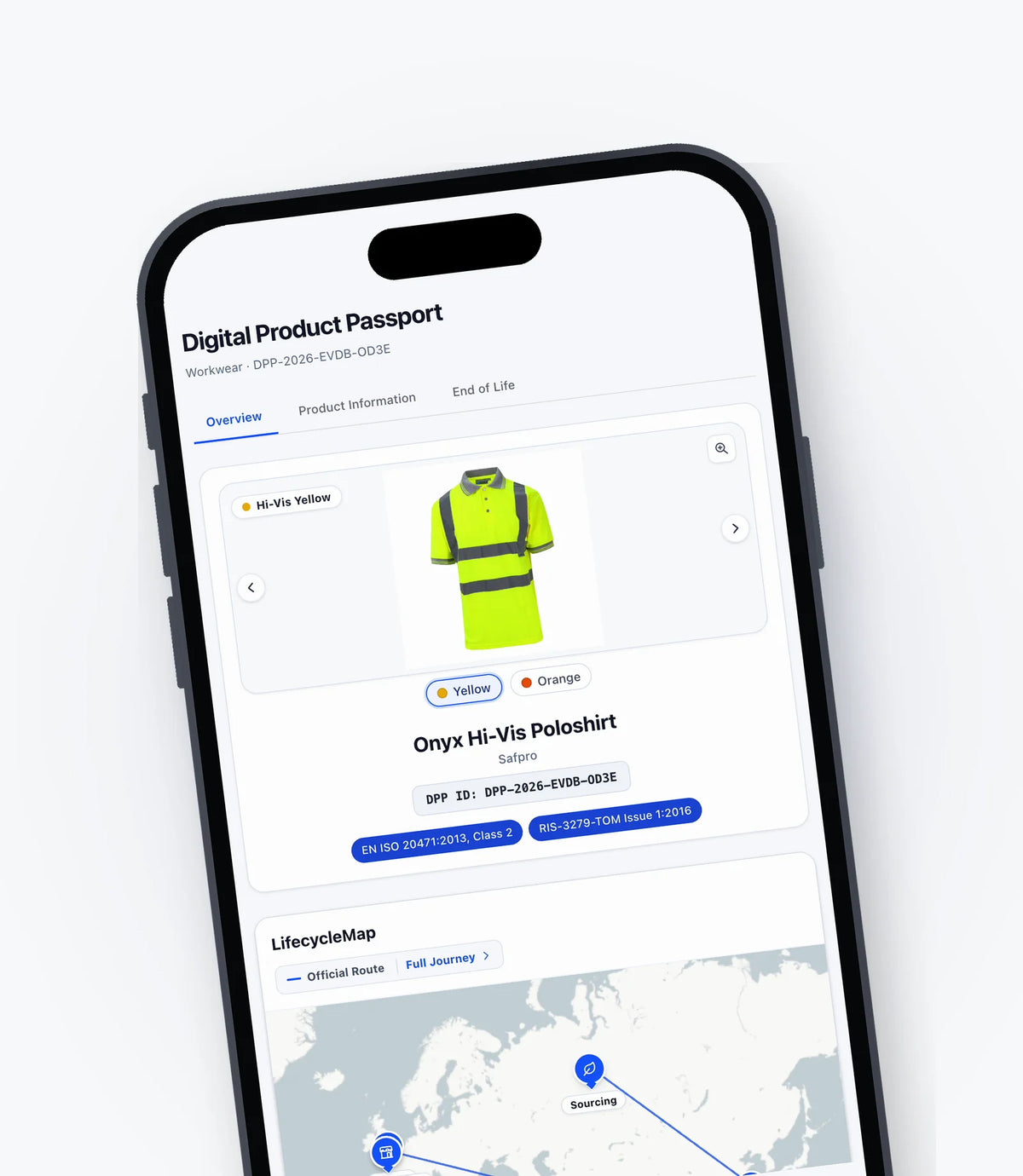
The registry is a central index. For every Digital Product Passport, it holds a unique identifier, a set of registration data and a pointer to where the passport itself lives. Think of it as an address book: it tells authorities, customs and other parties that a passport exists for a product and where to find it.
The rules for how it works are set out in Commission Implementing Regulation (EU) 2026/1778, adopted in July 2026.
What the registry does not do
It does not store your product data. The full passport, with materials, origin, carbon footprint, repair and end of life information, stays with you or with your passport service provider. The EU model is deliberately decentralised.
It also does not check whether your data is correct. The registry confirms that a passport exists and where it is. The quality of what is inside remains your responsibility, and that is where most of the work sits.
Who has to register, and when
Today, no product group has a live obligation to register yet. The first mandatory passports are for batteries under the EU Battery Regulation: electric vehicle batteries, light means of transport batteries (think e-bikes and scooters) and industrial batteries above 2 kWh, from 18 February 2027.
Product groups under the Ecodesign for Sustainable Products Regulation (ESPR) follow one by one, each through its own delegated act. Iron and steel is expected first, with the Commission targeting the end of 2026, followed by textiles, tyres and aluminium. Each act sets its own data fields and its own deadline, usually with a transition period of around 18 months.
Why this matters now
The registry turns the passport from a policy idea into infrastructure. Once your product group's rules apply, a product without a valid, registered passport cannot be placed on the EU market. The registration step itself is quick. Collecting correct data for every product, from every supplier, and keeping it current, is not.
What to do this quarter
- Map where your product data lives today: ERP, PLM, spreadsheets, supplier emails and certificate PDFs.
- Check which product groups you sell, and follow the delegated acts that apply to them.
- Ask your key suppliers which data they can already share, such as material composition, origin and carbon footprint, and in what format.
- Test the registry's test environment, or ask your passport provider whether they already connect to it.
How Arkive fits in
Arkive connects to your systems once through an API, brings product and supplier data into one record, flags what is missing or inconsistent, and produces both the passport and the LCA from that same record. It also connects to the EU registry, so registration is part of the flow rather than a separate project.
Want to see what a passport would look like for one of your products? Book a 30-minute call, or start with your first 5 passports for free.