How does an automated LCA work in a Digital Product Passport? One t-shirt, step by step
2 November 2026
How does the life cycle assessment inside a Digital Product Passport actually work? We follow one organic cotton t-shirt from the brand's office to the inspector, and show how Arkive builds the LCA automatically from data you already have.
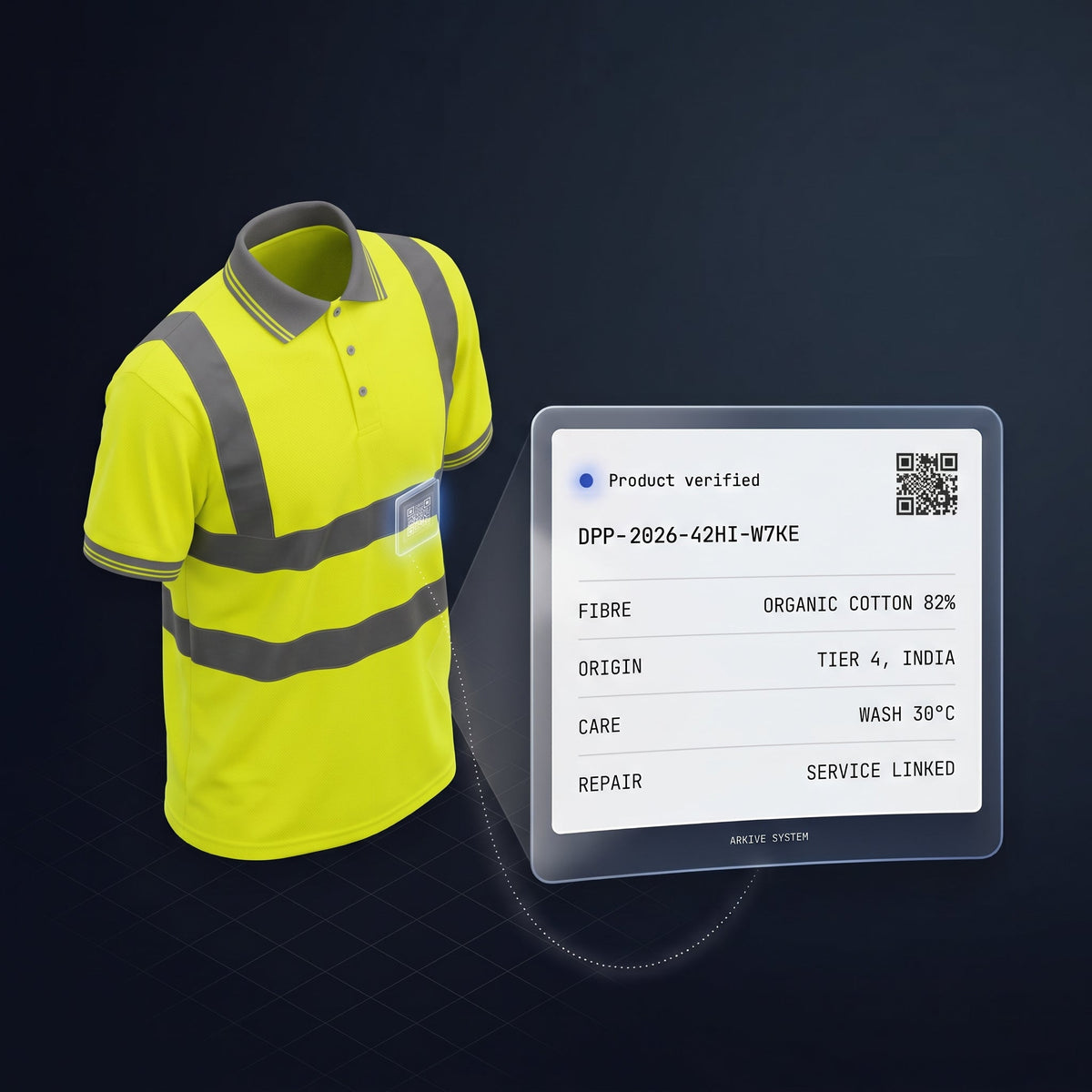
Most people searching for a Digital Product Passport (DPP) have the same question. What actually happens between my product data and a passport with a carbon footprint on it? The answer is the life cycle assessment, or LCA. In this guide we follow one organic cotton t-shirt and show, step by step, how Arkive builds that LCA automatically.
Prefer to watch? The one minute video How LCA works in 60 seconds shows the same story.
Türkçe izlemek ister misiniz? Videonun Türkçe versiyonu.
What is an LCA in a Digital Product Passport?
A life cycle assessment measures the environmental impact of a product across its whole life. It looks at where materials come from, how the product is made, stored and sold, how it is used and what happens when it is thrown away. Under the EU Ecodesign for Sustainable Products Regulation (ESPR), many products will need a Digital Product Passport. The LCA is what turns the passport from a static label into proof of impact.
Traditionally an LCA is a consultancy project. It takes weeks, it ends up in a PDF and it is out of date the moment something in the supply chain changes. That does not work when you need a passport for every product. Read why static LCAs are being replaced by dynamic product footprints.
Step 1. It starts in the office
A brand plans a new t-shirt and lists what it needs. Organic cotton, yarn, fabric, dye, thread, a care label and packaging. When the t-shirt is finished, its Digital Product Passport is created. From that moment the product has one digital record that follows it for life.
Step 2. The journey of one t-shirt
Before it reaches a shop, the t-shirt passes through a chain of activities, each in a real place on a real date. For example:
- Picking cotton in India
- Spinning yarn and weaving and dyeing fabric in Turkey
- Sewing in Portugal
- Shipping to a warehouse in the Netherlands
Every one of these steps has an impact, and every one of them leaves data behind.
Step 3. Arkive collects the LCA input upstream
You do not need to be an LCA expert. You send the data you already have, through our API, your webshop or a spreadsheet:
- Materials and commodities
- Sub products, such as yarn and fabric
- The final product
- Locations
- Timestamps, meaning the in and out dates at each location
Arkive then sorts every record by date and groups it automatically into the six lifecycle stages of the LCA.
The six lifecycle stages in an Arkive LCA
- Sourcing. Materials and commodities, such as cotton fibre.
- Production. Manufacturing, such as spinning, weaving, dyeing and sewing.
- Warehousing. Storage before the product is sold.
- Sales points. Where the product is offered and sold.
- Usage. The use phase, including care and repair.
- End of life. Pre consumer waste, such as unsold stock, and post consumer waste.
The impact is calculated per stage, so you can see where the footprint really comes from. Where data is missing, Arkive shows the gap instead of hiding it. Want to try it on one product first? See how to simulate a Digital Product Passport for one product.
Step 4. Every QR scan adds data
The first three stages are filled from your supply chain data. The last three keep filling after the sale. Every time the QR code on the product is scanned, the passport receives a location and a time. This also helps you spot products turning up in markets where they should not be, which is how grey market sales are detected.
Step 5. One passport, different readers
The same record serves everyone who needs it.
- Consumers scan the label and see verified claims, such as the material, where it was made, the carbon footprint and care and repair guidance.
- Inspectors and authorities check the sustainability report in real time and can approve it, without waiting for a yearly report.
- Your own team sees which stage drives the impact and where to improve.
Why automate the LCA inside the passport?
- It stays current. When a supplier or location changes, the LCA updates with it.
- It scales. Once your data is mapped, every new product uses the same setup.
- It is traceable. Every number links back to the data it came from.
- It is ready for ESPR. The passport and its impact data live in one place.
Frequently asked questions
Do I need LCA knowledge to use Arkive?
No. You provide product, material and location data. Arkive structures it into the lifecycle stages and calculates the impact.
What data do I need for an automated LCA?
Materials, sub products, products, locations and the dates products arrive at and leave each location. Data after the sale is optional and is added automatically from QR scans.
Is an automated LCA the same as a certified LCA?
Arkive follows the method of ISO 14040 and 14044. It gives you a live, product level footprint. If you need a formally verified study, you can share the same data with your LCA consultant.
See it with your own products
Want to see how your products move through the six stages? Book a demo or make your first passport for free at arkivedpp.eu.